Move
2018

A door with a simple, classic form. Additional elements are rungs that can be freely arranged in the grooves of the guides. They make it possible to store things and facilitate their organization. The ways of arranging the rungs differ depending on the needs of the room in which the door is located. 

The simple form of the door makes it fit almost any space. The project was made for CTP Polska and implemented in Classen, participated in many company fairs.

MEMO
2017

Grip for the elderly for client Stocznia, deweloper of MEMO app.- memory tool for elderly. 

Currently in a process of implementation in several nursing homes and municipality offices. It was already tested and evaluated with 80 participants ages 60-80

Knotty
2017

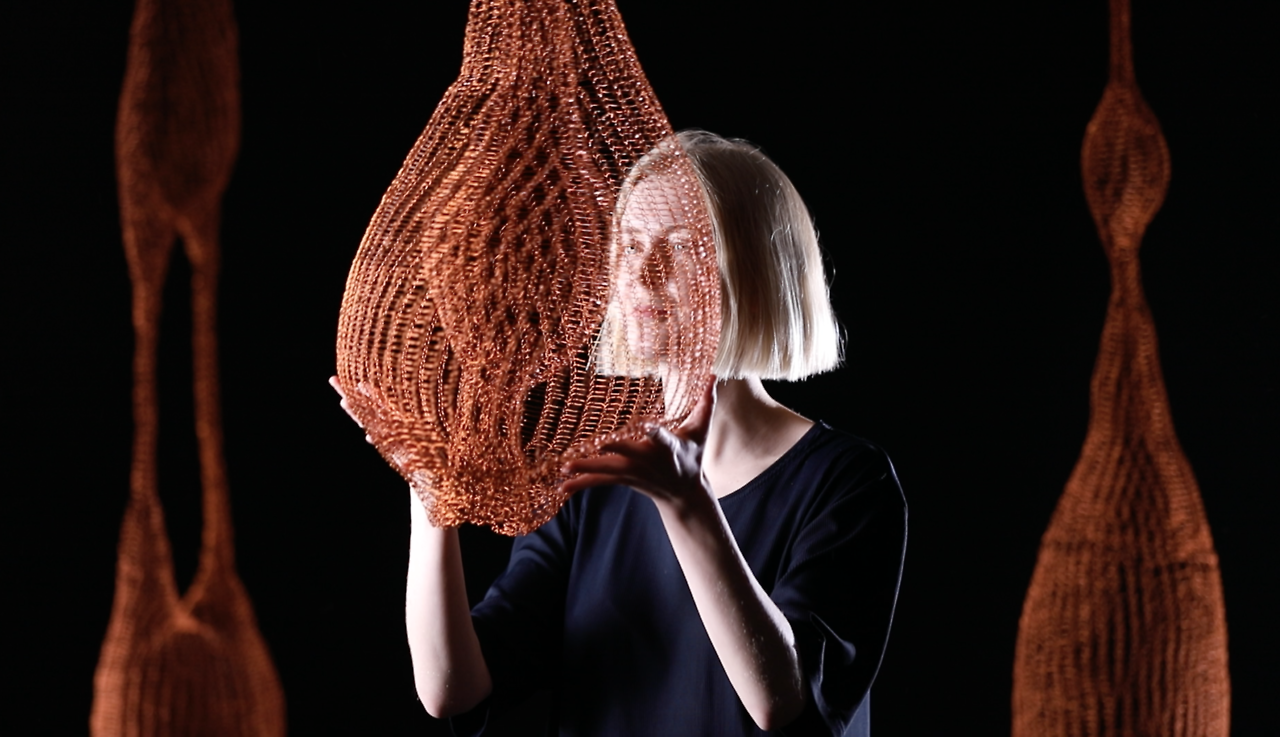
We used Kuka robot to knit copper wire structures. Knit fabric is currently used to cover and conceal, finding application mainly in fashion and upholstery. We believe that its applicability is much broader, so using it only as an external cover does not fully exploit its properties. The fabric is constructed from a single thread that can be made of almost any material. The process itself is continuous and endless, so the fabric can always be extended or unraveled.

The knit fabric is soft, without any harsh edges, its form encouraging touch – and interaction. The Knotty project shows that we can construct our world not from blocks or bricks, but knots and lines. Knit fabric and new technologies allow us to combine what is human with what is natural, bearing in mind that this artificially created dichotomy is only an illusion.

Bend
2019

Convection heater design. The main assumption of the project is its high efficiency and economy with energy consumption. The housing and the heater are matched to efficient heat circulation. The radiator design is divided into 3 elements that can be color-matched to the interior by choosing a coating from the wide range of varnishes offered by Terma. 

The top of the heatercan be successfully used as an additional shelf. Leaving a container with water on it will increase the air humidity in the room, adding essential oil will allow the chosen fragrance to spread easily. The project is currently optimizing production in order to obtain an affordable end product price. The cooperation with Terma ran from the first sketches to production.

Lunar
2018

Lunar is a handle design for rehabilitation equipment. Part of the project is an algorithm, thanks to which we can easily change the parameters of the handles. The main assumption is air circulation during exercise, which prevents sweating of the hands and grip during the grip, which is possible thanks to the varied, openwork structure.

Additionally, the elements are very light, so they are perfect for portable rehabilitation equipment. The project was led by BACKER. The design has the potential to be developed across an entire collection of handles.

Forbi
2019

Solid wood pendant lamp design (walnut, ash and oak). The advantage of the lamp is easy, glueless and tool-free assembly and disassembly to replace parts. The lamp is intended mainly for office spaces, available in three sizes: 1200mm, 1500mm and 1800mm. It is perfect for general lighting, in a conference room or acoustic booths. It has the uplight function – light directed to the ceiling. Directing the light upwards can help “raise” the ceiling, optically enlarge the space or improve the architectural structure and interior design features. 

It is also possible to change the length of the lines to match the lighting to the selected place. The lamp is characterized by a simple and functional design. An additional advantage is the possibility of choosing a stain from a wide range of Workagile colors. Thanks to the use of solid wood, the lamp ages beautifully over time.

Joyn – Inclusive Tableware

2026

JOYN is an inclusive tableware collection consisting of cups, plates and cutlery designed for older adults affected by neurodegenerative diseases, muscle loss and other conditions that impact motor control, coordination and hand tremors. 

Eating meals is not just about satisfying hunger. It’s an essential part of wellbeing, social life and enjoying time together at the table.

Problem

Shame and discomfort associated with eating often lead older adults to withdraw from social life. Many avoid shared meals and social gatherings around the table to escape perceived judgment from others. One example is the study “You’ve Got to Be Old to Go There”, which highlights how shame and embarrassment resulting from health conditions such as Parkinson’s disease constitute significant psychosocial barriers to shared dining experiences. 

As people age, various health conditions can make eating independently more difficult. Parkinson’s disease is particularly representative, as it encompasses many of the challenges associated with self-feeding. Similar symptoms can also be found in other neurological conditions and disabilities.

Target users

The tableware is designed for older adults and individuals who experience difficulties with eating independently due to reduced motor control, impaired grip strength, tremors, limited dexterity, visual impairments, or cognitive decline. 

The target users include people living with Parkinson’s disease, Alzheimer’s disease, rheumatoid arthritis (RA), carpal tunnel syndrome, muscular dystrophy, spinocerebellar ataxias, peripheral neuropathy, multiple sclerosis (MS), amyotrophic lateral sclerosis (ALS), as well as blind and visually impaired individuals.

Limitations of existing tableware

Although specialized plastic tableware designed to support older adults is widely available, our research revealed that such products are rarely accepted or used by the people they are intended to help. 

Most of these products come from China, are low quality, and don’t meet users’ aesthetics expectations. Their materials are often uncertified and may contain harmful substances.

Research based

The project was informed by scientific research, in-depth interviews, co-design workshops and three rounds of iterative user testing with older adults. 

Insights gathered during each stage directly informed the redesign of the prototypes, resulting in a solution that was continuously refined in collaboration with its users.

Designed with
diverse users

The study involved participants living with Parkinson’s disease and Alzheimer’s disease, as well as people with visual impairments and carpal tunnel syndrome.

It also included individuals with reduced mobility, coordination, or motor control caused by various conditions, as well as people with metal implants in their hands or arms.

Soup bowl
€75

Designed to provide a secure grip and make handling food easier during meals. Bowl shape supports scooping and serving while reducing the risk of spills.

Thanks to a geometry that directs liquids toward the center of the plate rather than its edges. Additionally, strategically placed grips on both sides help stabilize movement and improve control.

Dinner plate
€65

The dinner plate also features raised edges. Its extended rims, similar to those of the soup bowl, make it easier to carry the meal and help keep the plate stable on the table while eating.

Dessert plate
€60

The dessert plate has asymmetrical raised edges—higher on one side and lower on the other. This allows for easier scooping while ensuring the dessert remains clearly visible and beautifully presented.

Mug
€55

The mug is highly stable when placed on a table. Its large handle allows the user to fit their entire hand through it, providing a secure and comfortable grip.

The mug also has an increased capacity, making it suitable for serving tea, coffee, or other beverages while still leaving enough space at the top. This reduces the risk of spills when carrying the drink.

Glass
€45

The glass also features a protruding rim around its body, making it easier to hold securely and reducing the risk of slipping from the user’s hands.

In addition, people with visual impairments often prefer porcelain drinkware because it is easier to see and distinguish from its surroundings.

Cutlery
€1000

The cutlery was designed to provide a secure grip and improve control during use. It is strategically weighted to help stabilize hand movements, making it particularly beneficial for people experiencing hand tremors.

The additional weight also supports individuals with visual impairments or blindness, as it makes the utensils easier to perceive and track while in use.

Dots&Lines
2016

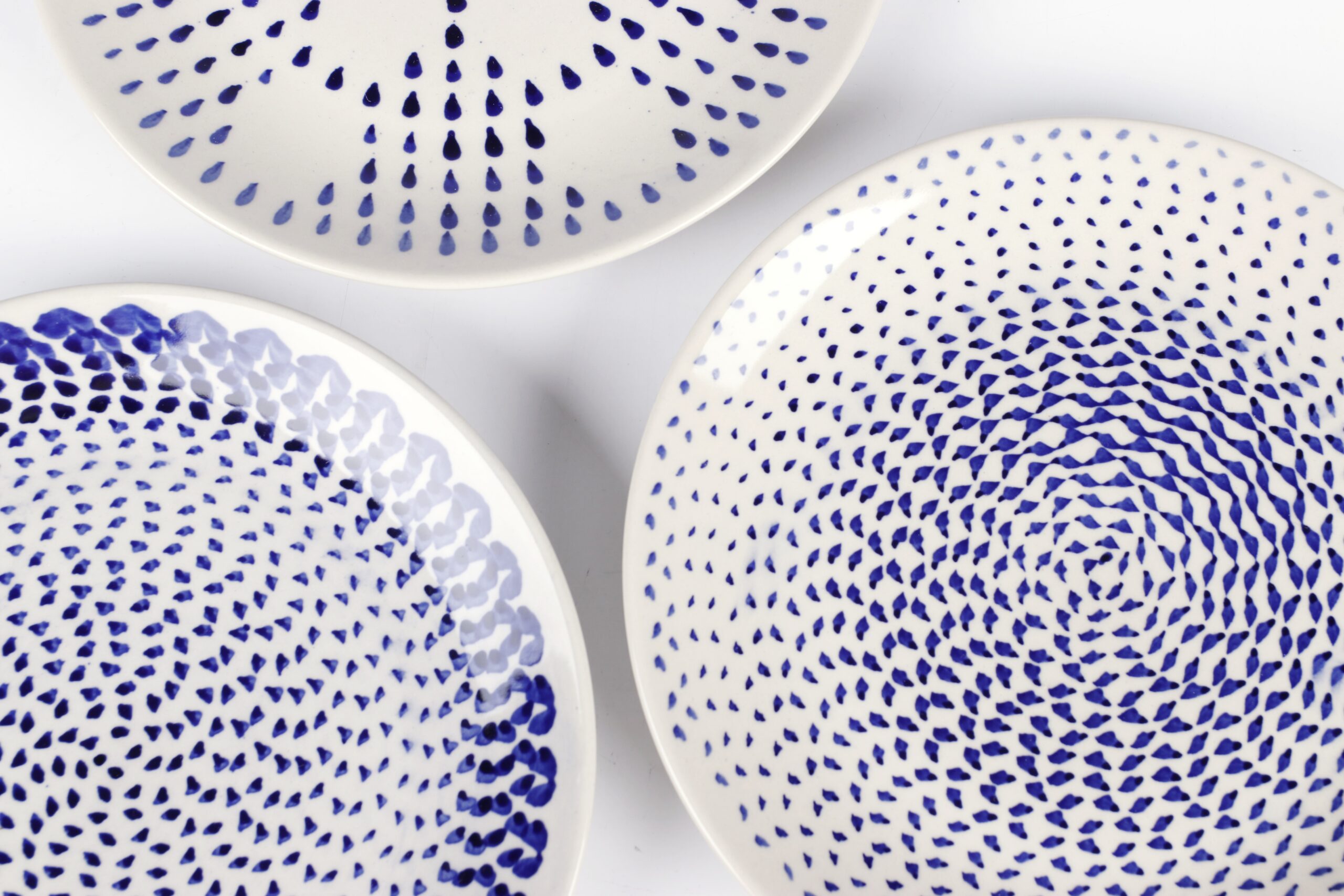
A series of plates from Bolesławiec, decorated with an industrial robot. The machine was equipped with a tool that created a series of repetitive patterns based on dots. However in this project, we wanted to give some error – a human aspect that would introduce variability in the programmed repeatability. 

It turned out to be the robot’s speed. When we increased it manually, the robot shortened the movements and created unpredictable lines instead of dots. Thanks to this, the patterns on the plates have become unique.

Kukaramika
2016

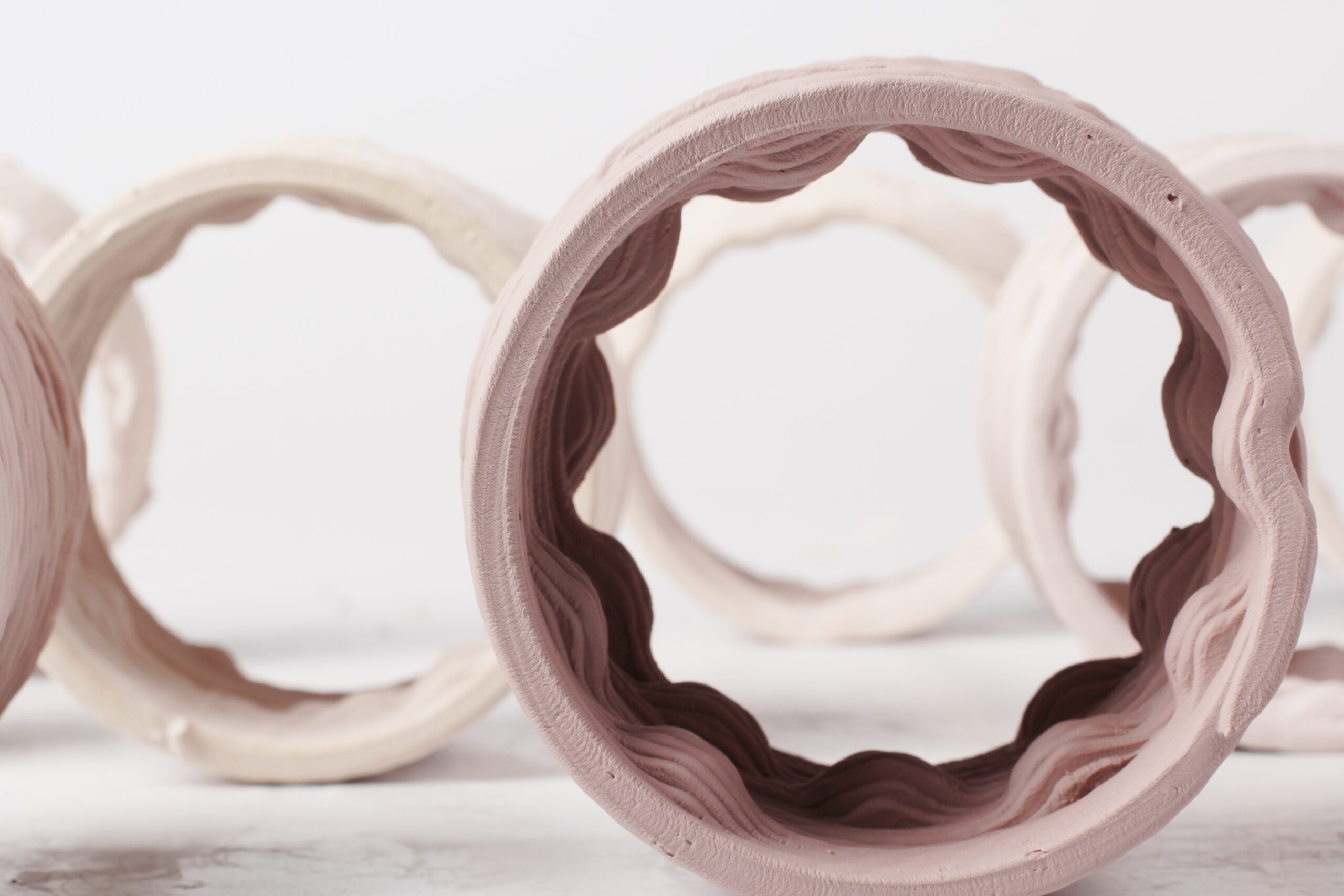
In this project we equipped the robot with a pressure extruder filled with a ceramic mass. A robot motion had been programmed in a similar way to a 3D printer by creating layer-by-layer objects. An imitation of a pottery craft wasn’t the most important point of a project. 

We wanted the robot to create objects that the user will be appreciating on the same level as a handmade craft. Our inspiration was a heart. Objects we printed were an interpretation of a heartbeat. A bulb is an equivalent of every single one recorded heartbeat sound that creates a series of a unique pattern on the ceramic object.